


Produtcs
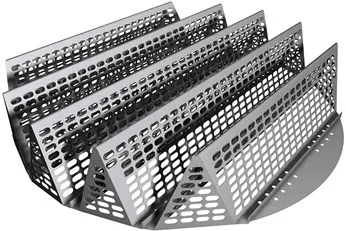
Auxiliary internals
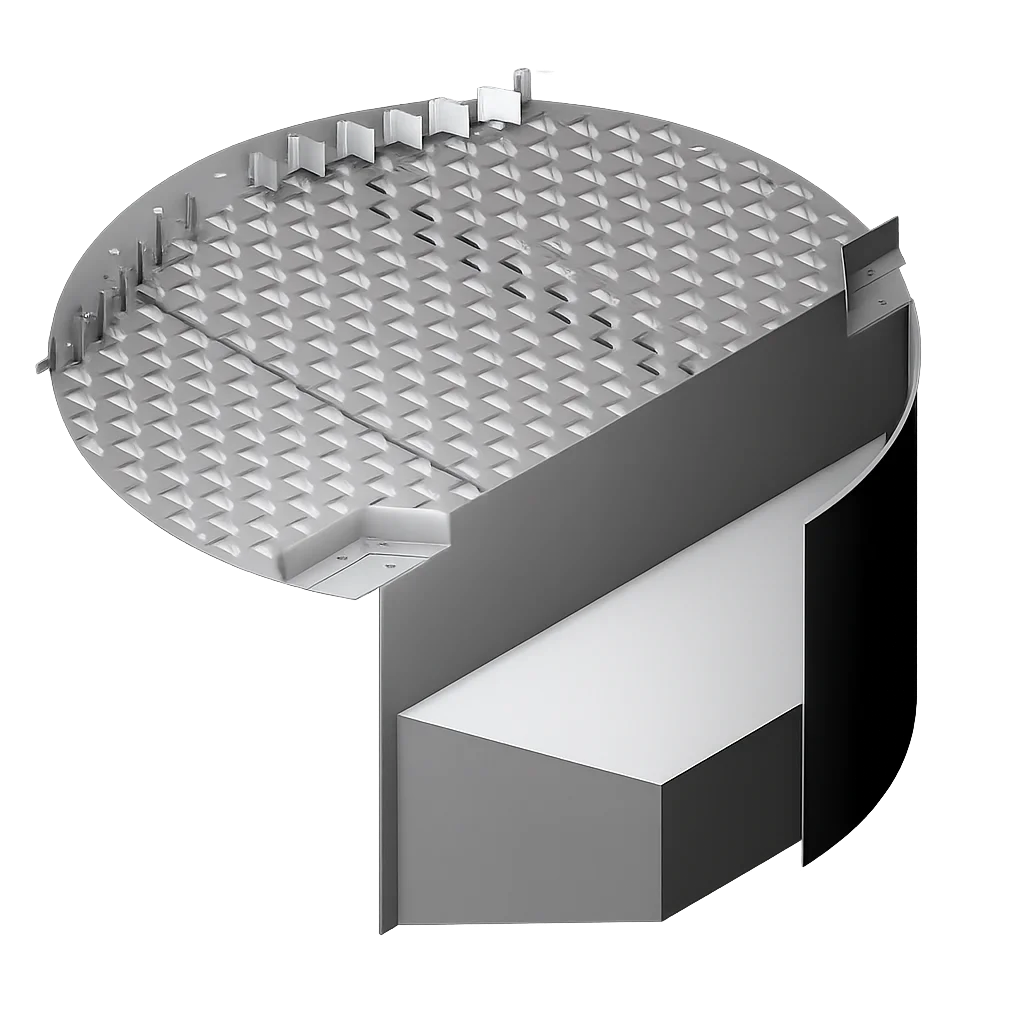
Mass-transfer trays
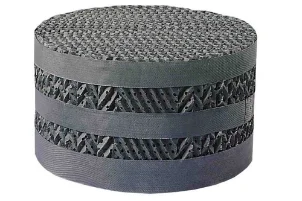
Structured packing
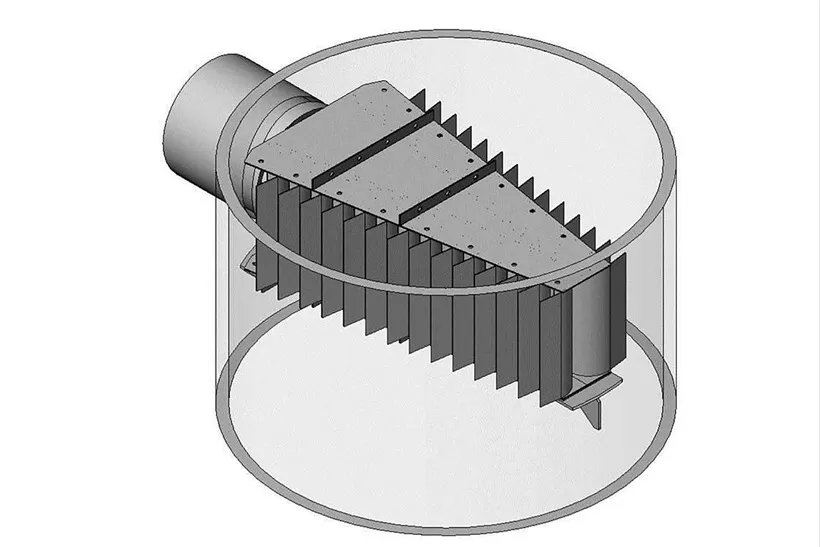
Liquid and gas inlet devices
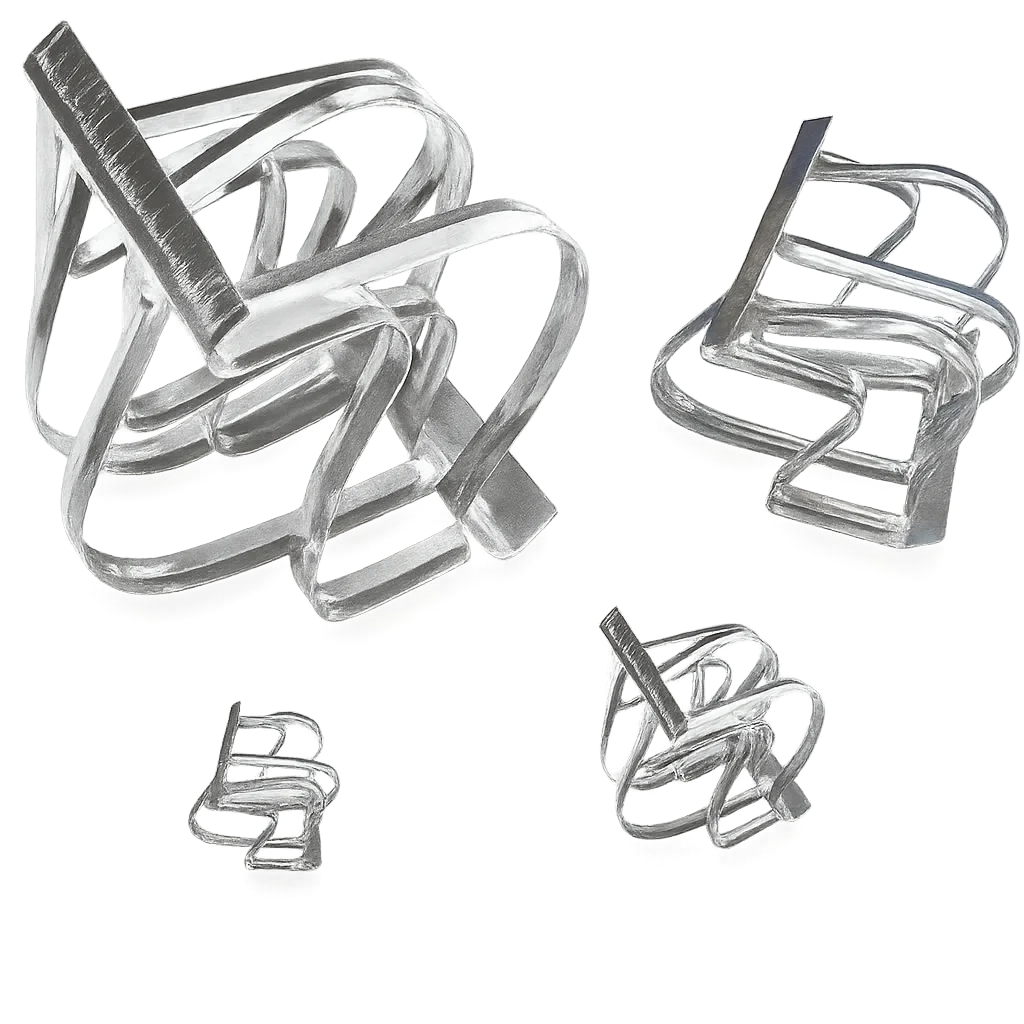
Random packing
Advantages


Каждый проект проходит многоступенчатую систему проверки
Internals can be manufactured from various materials, including stainless steel, Monel, Inconel and other alloys.
A professional approach to design, modern manufacturing equipment and rigorous quality control at every stage enable us to manufacture high-quality equipment.
Our company not only manufactures internals but also performs a full range of engineering calculations to ensure optimum equipment operation.
Our specialists develop unique designs and perform mechanical calculations, taking account of the process and the characteristics of the equipment used.
Column internals
Imagine a giant column as tall as a ten-storey building. Inside it, crude oil bubbles, boils and separates, turning into gasoline, kerosene and diesel fuel. But the metal “pipe” itself cannot do anything. Its “brain” and “muscles” are the column internals. They are what transform a chaotic feed flow into a clearly organised separation process. Today we will explain how these engineering marvels work—without complex formulas, but with due respect for the technical principles involved.
Why is the “inside” more important than the shell?
Columns are the backbone of the oil refining, chemical and gas industries. Yet 80% of a unit’s efficiency depends not on the thickness of the shell walls, but on what is hidden inside. Column internals form a carefully engineered gas-liquid contact system in which molecules are “sorted” according to their properties. Without them, instead of RON 95 gasoline we would obtain a homogeneous mixture suitable at best for boiler-house heating.
At the Spliteks plant in Serpukhov—the largest European facility producing this type of equipment—these “invisible heroes” are manufactured to millimetre precision. The plant produces components that operate at temperatures up to +400°C and pressures of tens of atmospheres, while lasting for decades without repair.
Description and types of internals: trays, packing and flow “conductors”
Column internals fall into three key groups, each performing its own role in the phase-separation orchestra.
Trays: floors of a molecular lift
Imagine a multi-storey car park where exchange takes place on every level: vapour rises, liquid flows down, and they actively “interact” where they meet. This is how sieve, bubble-cap and valve trays operate. Vapour bubbles through a liquid layer via openings or moving elements, creating maximum contact. Product purity depends on the number of these “floors”, which is why calculating the number of theoretical stages is critical when designing a column. One stage too many or too few, and the gasoline octane rating drops by several points.
Packing: a maze for molecules
If trays are a car park, packing is a multi-level maze in which every surface increases the phase-contact area. Random packing (randomly loaded elements) and structured packing (structured blocks) fill the shell of a packed distillation column, turning it into a giant molecular-scale “mixer”. A column with structured packing is particularly efficient: it delivers high capacity within a compact footprint, which is critical when upgrading existing plants.
Distributors: invisible conductors
Even the most advanced trays or packing are useless if the flows are distributed unevenly. Imagine a shower with clogged holes: the water comes out in streams rather than as an even “rain”. The same applies in a column: without high-quality distribution devices for packed columns, part of the packing remains “dry” while another part becomes flooded. The result? Product losses, excessive energy consumption and premature wear. That is why Spliteks pays particular attention to hydraulic calculations, ensuring that every millilitre of liquid and every cubic metre of vapour contributes to the result.
How does this work in practice?
In oil refining, column internals make it possible to achieve a yield of up to 95% of valuable products from a single barrel of crude oil, from aviation kerosene to lubricating oils. In the chemical industry, the same principles are used for gas purification: for example, sulphur dioxide is “captured” by a special liquid in absorbers, preventing atmospheric emissions.
And in pharmaceuticals? The same columns, but in miniature, separate complex organic compounds for pharmaceutical manufacturing. The versatility of Spliteks solutions makes it possible to adapt the same principles to applications ranging from oil production to vitamin manufacturing.
Why choose Russian-made equipment?
After Western manufacturers left the market, Spliteks—the direct legal successor to Sulzer Chemtech in the Russian Federation—retained all the technologies while adding the flexibility of local production:
- Lead times: a made-to-order unit from scratch in as little as 4 weeks (imports take 6–9 months)
- Customisation: the internals are adapted to the characteristics of Russian feedstocks (high sulphur and resin content)
- Service: installation supervision, personnel training and on-site repairs, with no need to wait for experts from abroad
Today, the 10,000 m² plant in Serpukhov manufactures more than 220 types of column internals, ranging from standard solutions to unique designs for specific projects. Every component undergoes multi-stage inspection, from hydraulic testing to 3D geometry scanning.
Column internals are like a good theatre director: the audience sees only the actors on stage—the finished product—but it is the director who determines how harmonious the performance will be. They do not draw attention to themselves, yet modern oil refining, clean air around industrial plants and affordable medicines would all be impossible without them.