


Inlet device
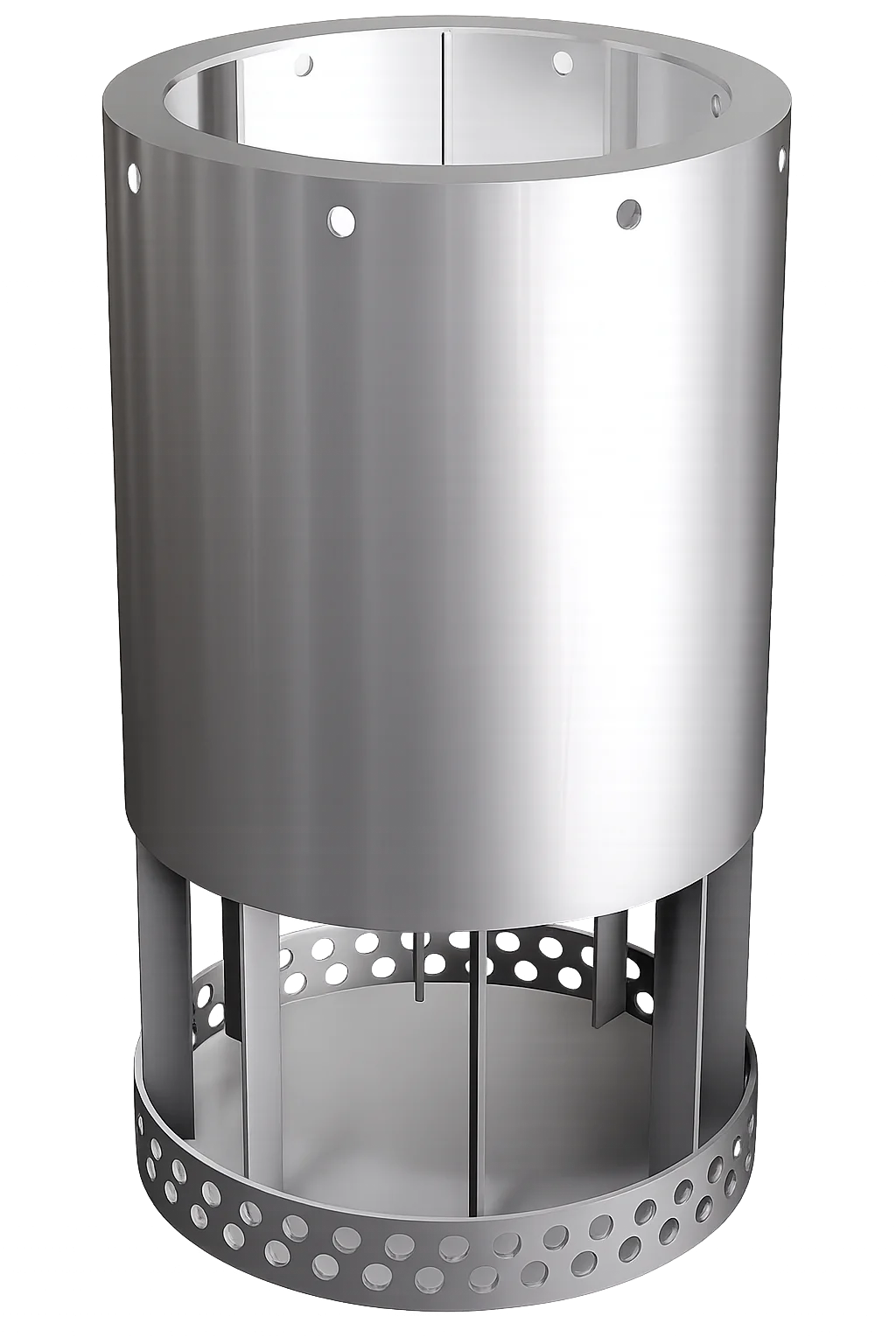
Spliteks LLC is a technology and engineering company and the successor to the Russian division of the Sulzer Group. The modern plant in Serpukhov manufactures high-tech heat- and mass-transfer equipment for oil and gas processing and petrochemicals, including key reactor-system components. One of the key equipment components determining the efficiency of chemical and oil and gas processing operations is the reactor inlet device. Together with the primary distribution device, it ensures uniform feedstock or heat-transfer-medium supply to the reaction zone, directly affecting unit stability and target-product quality.
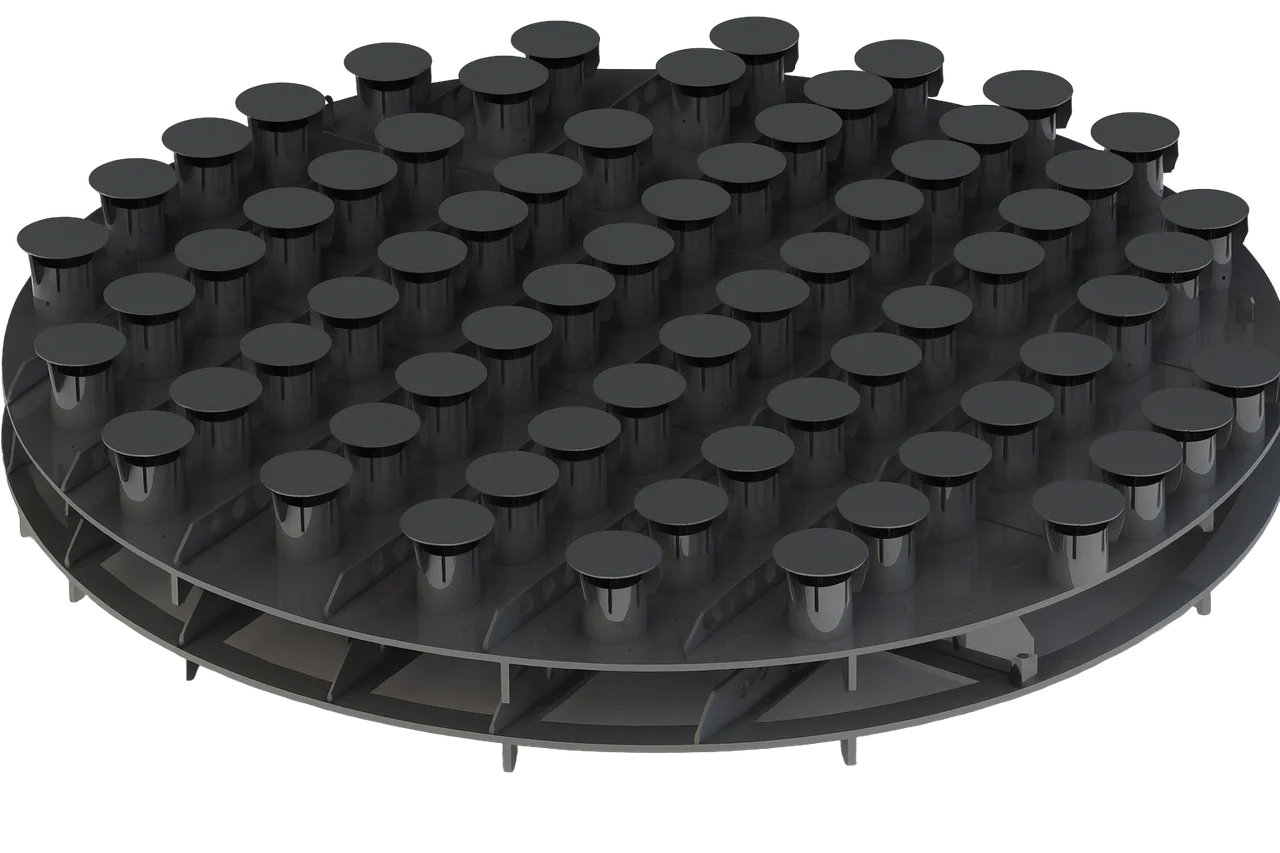
The function of the inlet device is to ensure uniform distribution of the gas/feed mixture across the entire reactor cross-section, promoting optimum chemical reactions and improved process efficiency.Flow distributors are generally installed in the upper part of the reactor and consist of multiple openings or channels through which the gas mixture enters the reaction zone. Uniform distribution is achieved through the precise design of the distribution device, taking account of the gas-mixture characteristics and reactor geometry.
Flow distributor functions:
- Ensuring uniform composition of the gas/feed mixture in the reaction zone.
- Minimising stagnant-flow zones and preventing hot spots.
- Increasing contact time between reactants and catalyst.
An efficient flow distributor is an important component for achieving high capacity and final-product quality in a chemical reactor.
Fields of Application
Do you have any questions?
Purpose and operating principle of the reactor inlet device
The reactor inlet device is designed to introduce liquid, gaseous or two-phase streams into the vessel in a controlled manner. Its main operating principle is to transform an uneven incoming flow into a uniformly distributed system of jets or droplets across the entire reactor cross-section. Without such a device, stagnant zones and local overheating occur and conversion decreases. Different designs—slotted, nozzle-type or tray-type—are used depending on the process (hydrotreating, reforming or alkylation). Proper flow introduction extends the unit’s run length between turnarounds and reduces the risk of deposits forming on internal surfaces.
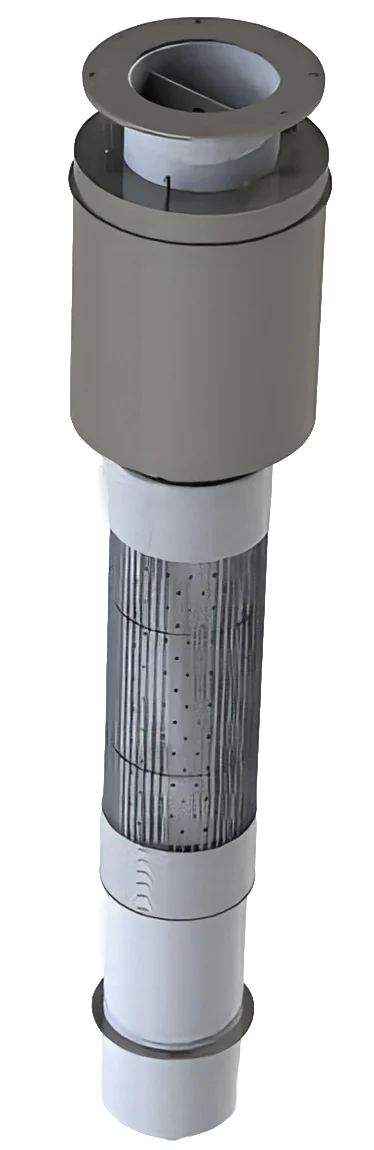
As the heat-transfer medium or feed enters through the inlet nozzle, its velocity is reduced in the pre-distribution chamber, after which it is directed into the reaction zone through calibrated holes or slots. In fixed-bed catalytic reactors, the primary distribution device ensures the same loading per unit volume of catalyst. This arrangement guarantees stable equipment operation throughout the turnaround cycle.
Design features and layout of the primary distribution device
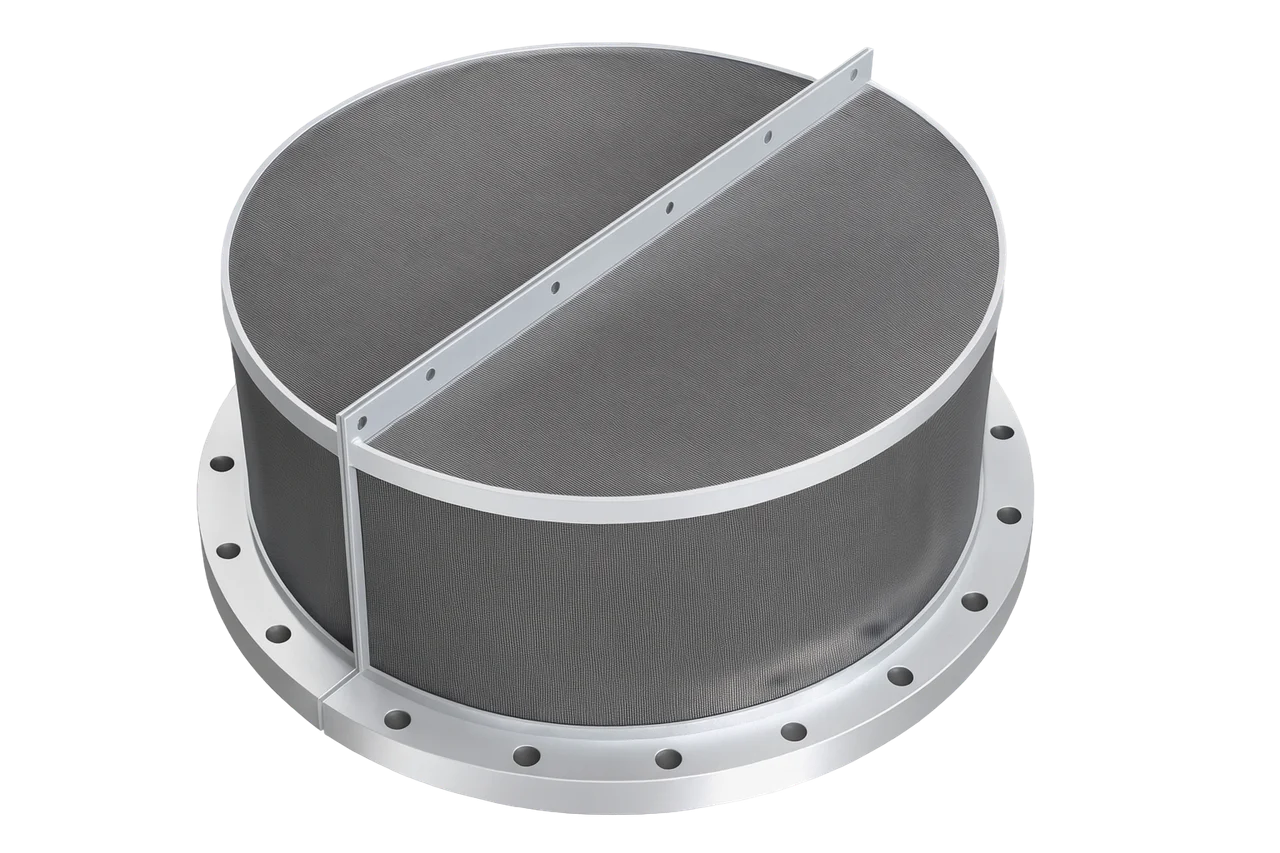
Most modern reactors incorporate a primary distribution device installed directly below the inlet nozzle. A typical arrangement includes a diffuser, a perforated plate, a system of guide vanes and a header chamber. The internals are manufactured from corrosion-resistant steels or alloyed materials capable of withstanding high temperatures and aggressive media. Each component is designed with due regard to hydraulic resistance and the required flow distribution.
When designing the device, engineers calculate the number and diameter of holes, the shape of the deflectors and the spacing between components. Modern modelling methods achieve a flow-distribution non-uniformity coefficient of no more than 5–7%. For multiphase systems, the primary distribution device is supplemented with bubbling trays or mist eliminators. This design operates reliably in all modes, from automatic to manual.
The role of the inlet device in power units and process plants
At major industrial facilities—CHP power units, petrochemical complexes and hydrocracking units—the correct operation of a reactor depends directly on the quality of its inlet device. During unit start-up, the reactor inlet device ensures a smooth transition to operating conditions without overloading the catalyst. During operation, tens of thousands of cubic metres of feed pass through the distribution elements every day. This equipment must operate continuously for 11–20 years.
Key advantages of Spliteks devices:
-
Custom design in exact accordance with the customer’s hydraulic calculation
-
Use of materials resistant to hydrogen sulphide and naphthenic-acid corrosion
-
Full manufacturing cycle, from metal cutting to final heat treatment
-
Installation support and commissioning work at the site
-
Quality documentation using non-destructive testing methods, including neutron radiography